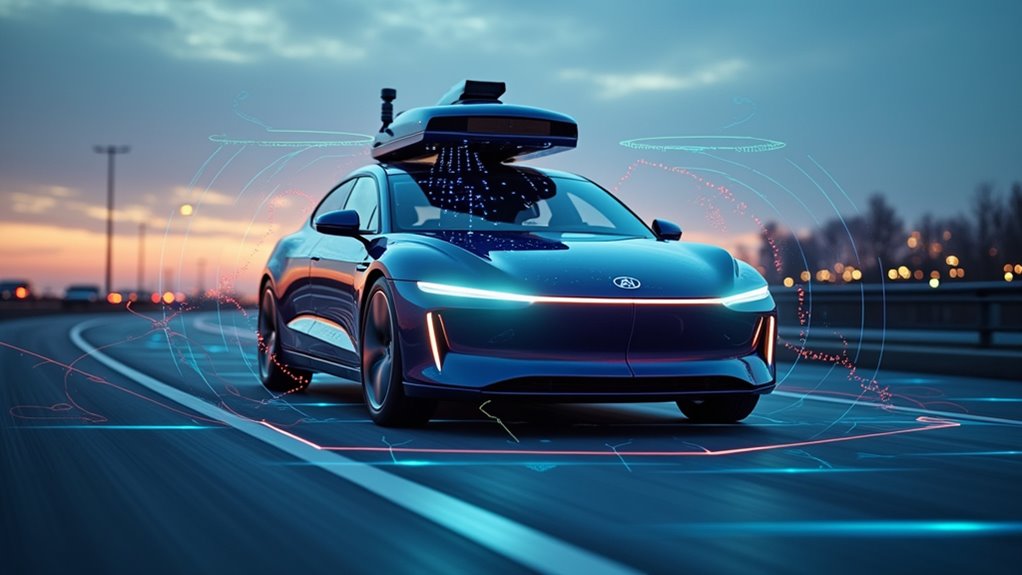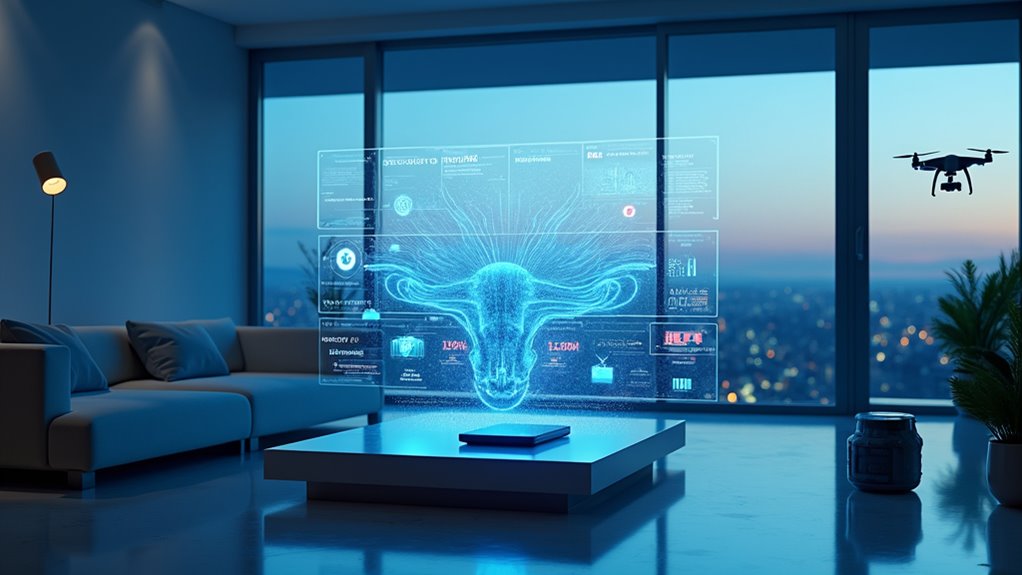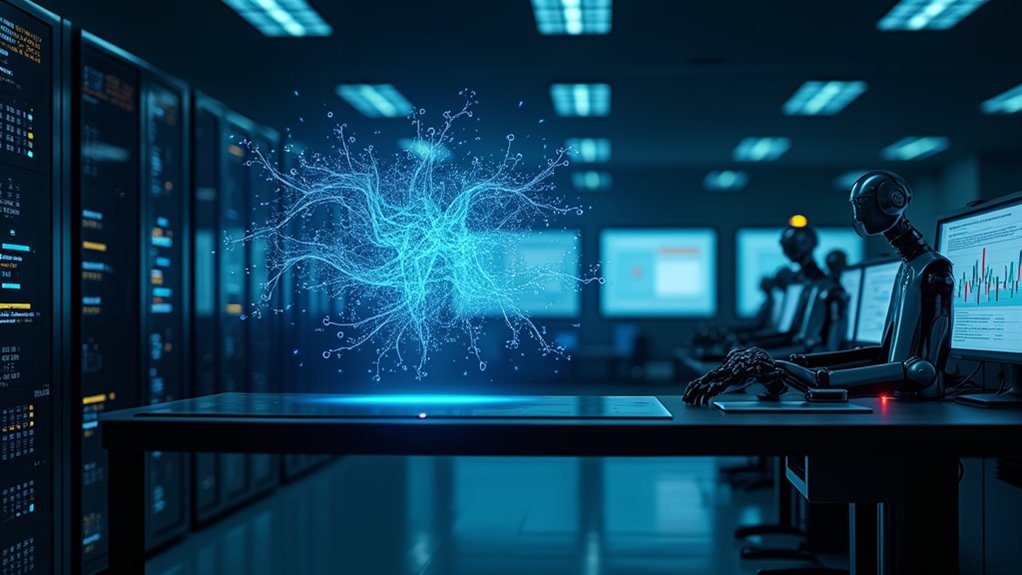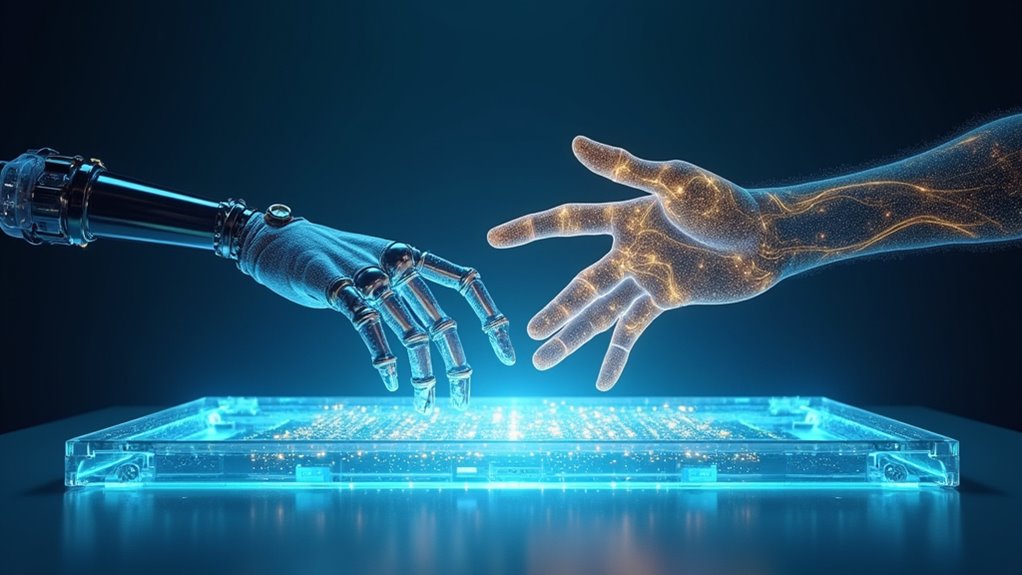
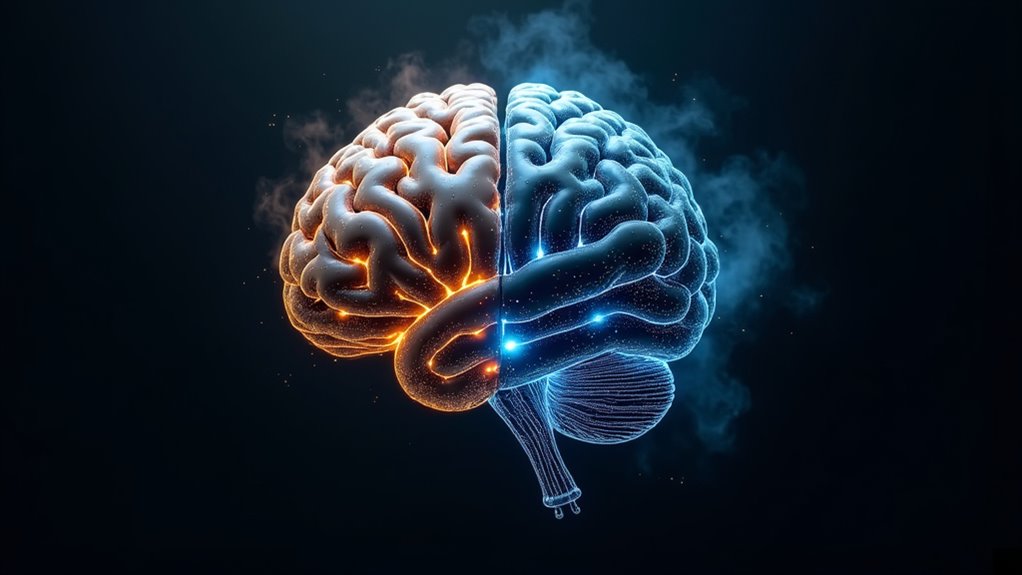
Co-intelligence pairs human creativity with AI’s analytical power – it’s not about robots taking over, but teamwork. Think doctors using AI to spot diseases faster, or artists collaborating with algorithms to create mind-bending art. The key? Humans keep their emotional smarts while AI crunches the numbers. Sure, there are challenges like bias and regulation, but the future looks bright. The real magic happens when silicon meets soul in ways we’re just beginning to understand.
While some fear AI will render humans obsolete, the reality is far more interesting. Co-intelligence, the collaboration between humans and AI, is reshaping how we tackle complex problems. It’s not about machines taking over – it’s about humans and AI working together, each bringing their unique strengths to the table. Humans contribute creativity and emotional intelligence; AI brings raw analytical power and data processing capabilities.
Co-intelligence isn’t about AI replacing humans – it’s about combining human creativity with machine analytics to solve tomorrow’s challenges together.
The practical applications are already transforming industries. In healthcare, AI crunches massive amounts of medical data while doctors apply their expertise to make final treatment decisions. Businesses are using AI to analyze market trends, but humans still call the shots on strategy. Even creative fields are getting in on the action – AI generates initial concepts, and human artists transform them into meaningful works. Who would’ve thought machines could help spark creativity? Like many general purpose technologies, AI has the potential to revolutionize virtually every sector of society. Digital platforms enable seamless collaboration between human experts and AI systems. Medical imaging analysis is revolutionizing diagnostic accuracy while maintaining the crucial role of radiologists in interpretation.
But let’s get real. Making this partnership work requires new skills. Adaptability is essential because AI keeps evolving – sometimes at a pace that makes your head spin. Critical thinking matters more than ever. After all, someone needs to make sense of what the machines are telling us. And yes, you’ll need some basic AI literacy. It’s like learning to drive – you don’t need to be a mechanic, but you should know how the basic controls work.
The challenges ahead are significant. AI technology is advancing faster than regulations can keep up. Bias in AI systems remains a thorny issue. And let’s not forget about the environmental impact – those data centers aren’t running on wishes and dreams.
But here’s the thing: we’re not passive observers in this technological revolution. Through interdisciplinary research and thoughtful collaboration, we’re learning to harness AI’s potential while maintaining human oversight.
The future isn’t about AI versus humans. It’s about AI plus humans. Together, we’re solving problems that neither could tackle alone. Sure, there will be bumps along the way. But with proper planning and ethical considerations, co-intelligence could lead to breakthroughs in science, medicine, and urban planning that we can barely imagine today.