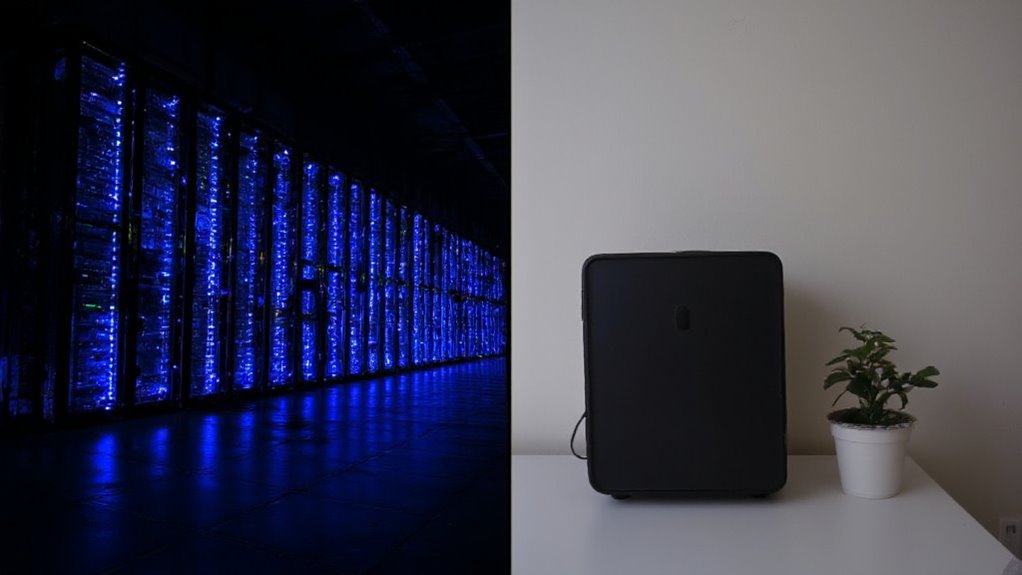

While tech giants continue pushing expensive AI solutions, a wave of affordable models is crashing onto the scene. The latest star? OpenAI’s o3-mini, a pocket-sized powerhouse that’s making waves in STEM education. It’s not alone. DeepSeek R1 brings free, open-source capabilities to the table – though its Chinese government ties have some folks raising eyebrows about privacy. These affordable systems are proving their worth, as training computation has grown exponentially over the past decade.
Let’s be honest: not everyone needs (or can afford) a Ferrari-level AI. The landscape is shifting. Gone are the days when only deep-pocketed corporations could play in the AI sandbox. Budget-friendly models are popping up like mushrooms after rain, each specializing in specific tasks. Google’s Gemini 2.0 Pro might be flexing its premium muscles, but smaller, specialized models are proving you don’t need a heavyweight to pack a punch. The growing availability of task-specific AI models helps users select tools that perfectly match their unique requirements.
AI democratization is here – powerful tools no longer require Fortune 500 budgets to access game-changing technology.
These affordable alternatives aren’t just cheaper versions of their expensive cousins. They’re smart, efficient, and surprisingly capable. Educational institutions are jumping on board, using these tools to democratize access to advanced learning resources. AI-powered recommendations drive nearly a third of e-commerce revenues through personalized experiences. Developers, too, are finding these budget-friendly options more than adequate for coding and research tasks.
The economic impact is impossible to ignore. Small businesses, once locked out of the AI game by prohibitive costs, are now getting in on the action. It’s like watching a technological revolution unfold in real-time, minus the ridiculous price tags. The focus has shifted from groundbreaking new discoveries to making existing systems more efficient and accessible.
But let’s not get too starry-eyed. These affordable models come with their limitations. ChatGPT Free users know the frustration of throttled results, and open-source solutions often trade privacy for accessibility. Yet the trend is clear: AI is becoming more accessible, more specialized, and more practical for everyday use.
The giants might still dominate the headlines, but these sleek, affordable models are quietly revolutionizing how we interact with AI technology.